
The Journey of French Perfumes to the Middle East
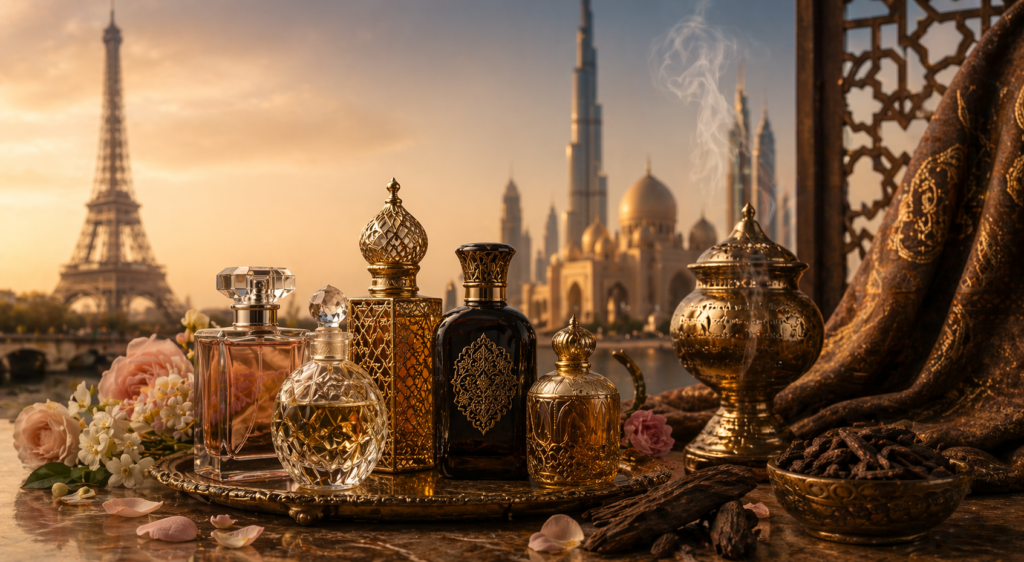
For centuries, fragrance has been an essential part of culture, identity, and luxury. While the Middle East has long been known for its deep connection to rich scents like oud, amber, and musk, French perfumery introduced a new dimension of elegance and artistry that eventually blended with Eastern traditions to create something truly unique.
The Origins of French Perfumery
France became the global capital of perfume in the 17th century, particularly in the city of Grasse. With access to high-quality flowers such as jasmine, rose, and lavender, French perfumers mastered the art of extracting and blending delicate scents. Over time, French fragrances became symbols of sophistication, refinement, and modern luxury.
Trade and Cultural Exchange
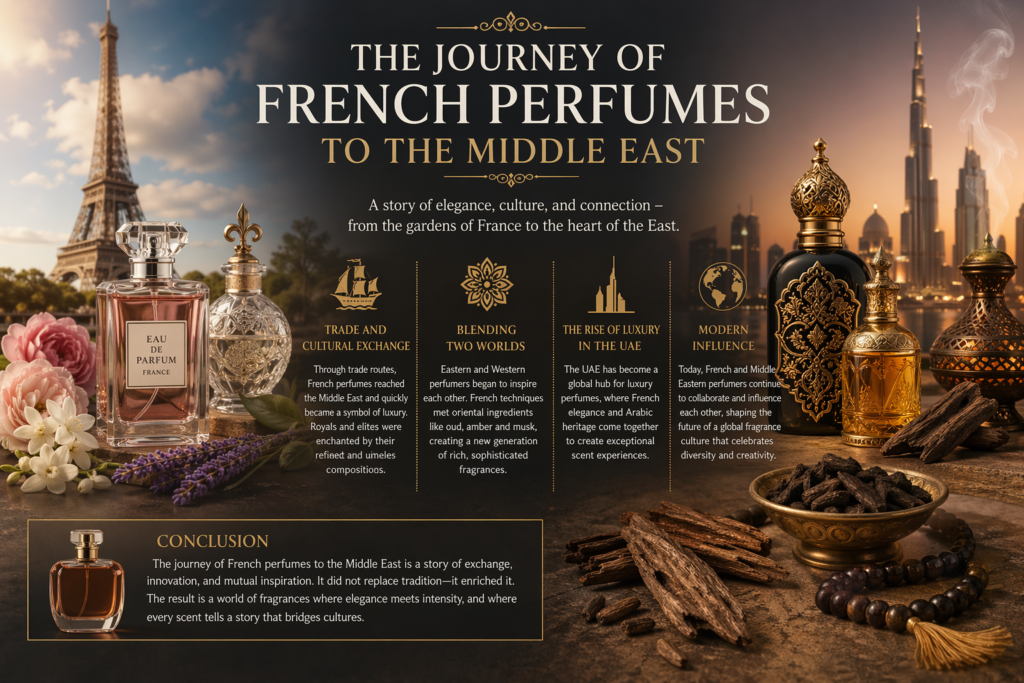
The connection between French perfumes and the Middle East began through trade routes and cultural exchanges. As European goods gained popularity among Middle Eastern elites, French perfumes quickly became highly desired. Wealthy individuals and royal families were especially drawn to their refined compositions and unique floral and fresh notes, which differed from traditional oriental scents.
Blending Two Worlds
Rather than replacing traditional fragrances, French perfumes inspired a fusion. Middle Eastern perfumers began incorporating French techniques—such as layering top, heart, and base notes—into their own creations. At the same time, Western perfumers became fascinated with oriental ingredients like oud and incense.
This exchange gave rise to a new category of fragrances: Oriental perfumes with a French touch. These blends combine the depth and intensity of Eastern ingredients with the elegance and balance of French perfumery.
The Rise of Luxury Fragrance Culture in the UAE
In countries like the United Arab Emirates, the demand for luxury perfumes grew rapidly. International French brands entered the market, while local perfume houses began crafting high-end scents inspired by both traditions. Today, the UAE is considered one of the most important perfume markets in the world, where East meets West in perfect harmony.
Modern Influence
Today, many perfume brands—both French and Middle Eastern—continue to collaborate and influence each other. French perfumes are no longer just imports; they are part of a larger global fragrance culture that embraces diversity and creativity. Meanwhile, Middle Eastern scents like oud have become highly sought-after in Europe and beyond.
Conclusion
The journey of French perfumes to the Middle East is a story of exchange, innovation, and mutual inspiration. It did not replace tradition—it enriched it. The result is a world of fragrances where elegance meets intensity, and where every scent tells a story that bridges cultures.